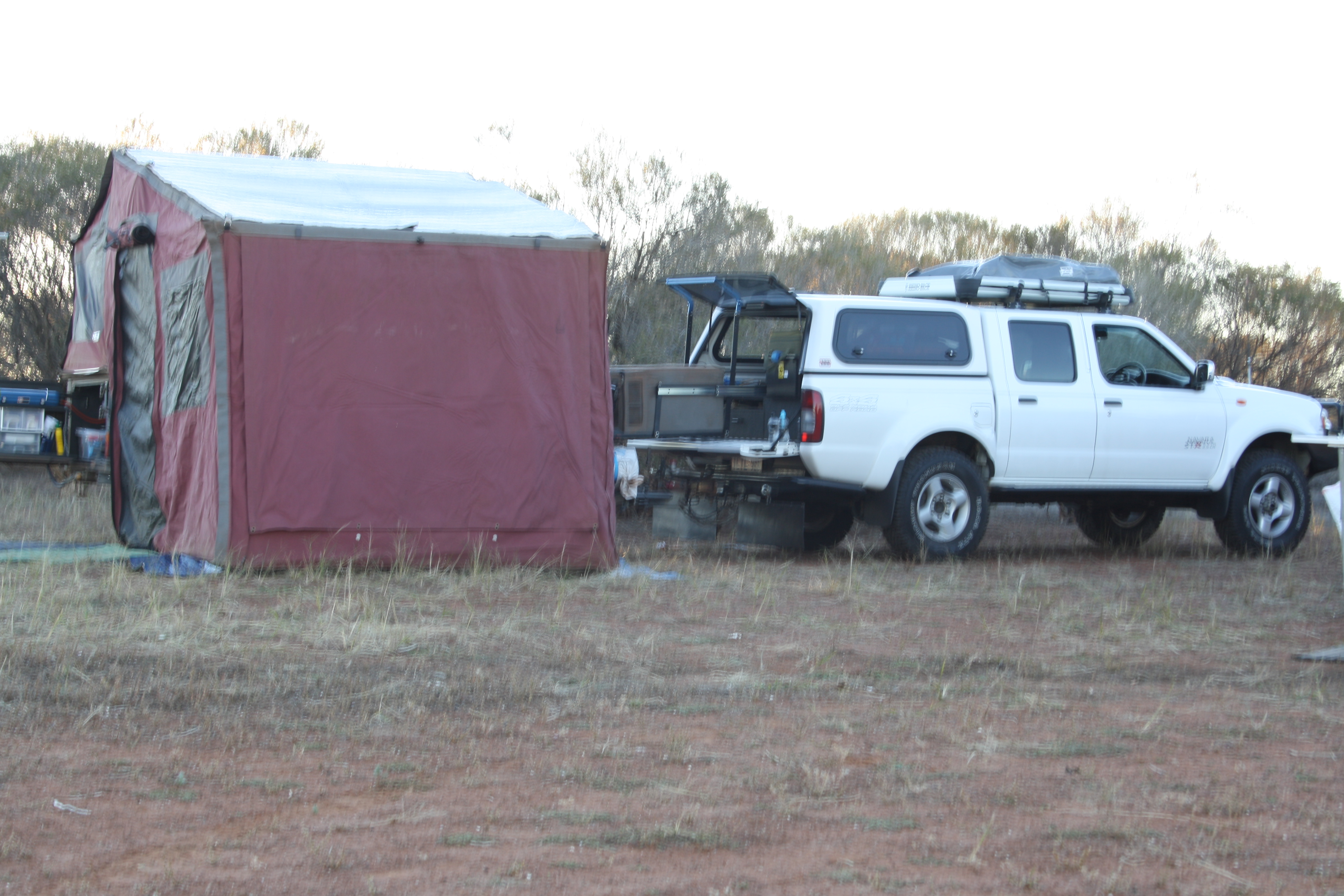
We have finally left the Northern Territory and are now in Mt Isa, Queensland. We will be in the bottom half of the NT in the first week of October before heading across the Central Desert in to WA. Our first stop in the NT was at Katherine which is a big town that services the rural and remote areas. I did not particularly like Katherine as it was hot (around 38C every day) and all the things we wanted to do such as tour with the School of Air and swim/canoe at Nitmiluk National Park weren’t available, plus our camper backed onto the highway which had a road train stopping area across the road, hence the noise was LOUD and went non-stop 24/7!! Their saving grace was definitely their museum which had great displays of the Katherine flood in 1992 where the river peaked at 22m and the whole town was about 10m under water and also a great display at the Clive Fenton hangar. Clive Fenton pioneered the flying medical services in NT prior to the Royal Flying Doctors Service starting in Qld. He was obviously a very brave man as he had numerous accidents when landing as there were no airstrips like there are today.
Our next stop was the Douglas River Hot Springs which had 78C water coming out of the rocks which flowed into the Douglas River and made the water warm. We spent two days here and saw a 3m olive python, two yellow tree snakes, which scared the lights out of us until we realised they weren’t dangerous, and a Merten’s Water Monitor (lizard) that caught freshwater prawns and ate them. The boys loved it here as they could swim and play all day. This was also were we saw our first UGLY cane toads which we immediately killed. Cane toads are vermin as they poison everything that eats them such as lizards, snakes and quolls. Currently, the cane toad is attempting to enter the northern parts of WA but the Toad Busters and Dept of Environment and Conservation are managing to keep them at bay. They originally brought 8 cane toads into Qld to eat the cane beetle, it never ate the cane beetle and is now wiping out Australian native reptiles at an alarming rate, so a good cane toad is a dead one!!
We then travelled further north to Litchfield National Park which was nothing short of amazing. It was filled with gorgeous waterfalls, swimming holes and other interesting natural icons such as rock formations and termite mounds.
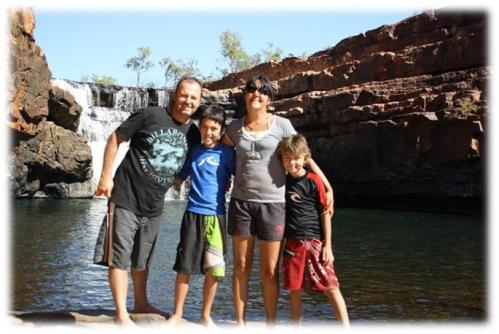
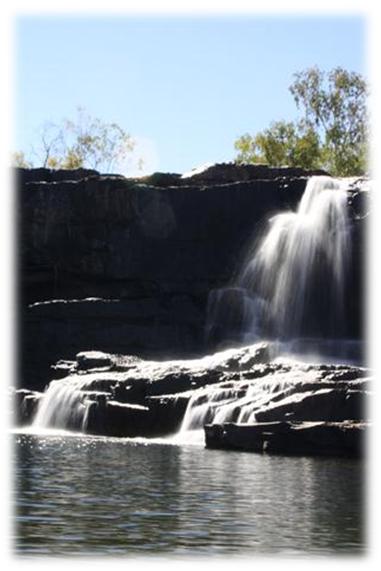
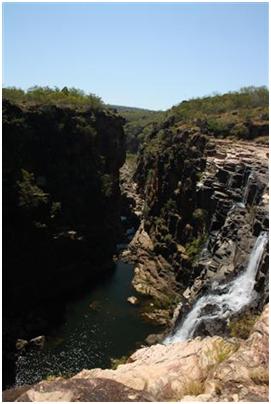
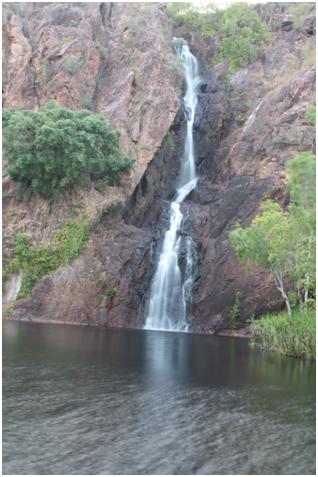 Wangi Falls was beautiful and had a huge swimming area. We all swam over to the falls and jumped off the rocks. We camped at the Wangi Falls campground for the three nights we were at Litchfield NP and then drove to other destinations from there each day.
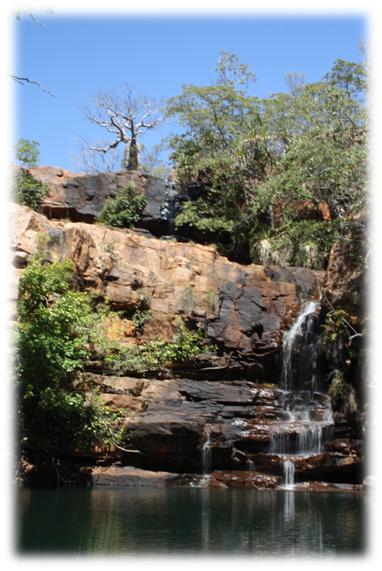
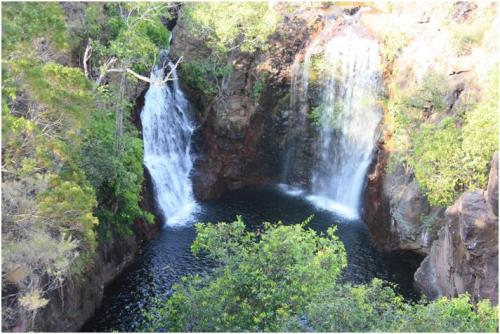 Florence Falls was stunning but the water was cold as it got little sunshine in the swimming hole. From Florence Falls we went on the creek walk which was very scenic and showed the difference in the temperature and humidity when under the bush canopy. The difference in the temperature gauges between the creek walk and the savannah walk were about 9C.
From here we went to the Lost City which was rock formations that were created over millions of years due to weathering in the sandstone and conglomerate rock. It also had ripple rock which would have had either the sea or a river flowing over it at some stage. The boys were making up names for the rocks as some looked like a man and others the shape of a cat.
Our last day at Litchfield we spent at Buley Rockholes, which were a series of small waterfalls that had massive deep holes in the rocks which you could swim in. So we spent all day going from one rockhole to another which the boys loved.
Litchfield was quite commercialised with lots of tour groups and buses as all the roads are sealed but it didn’t devalue any of the park’s natural beauty.
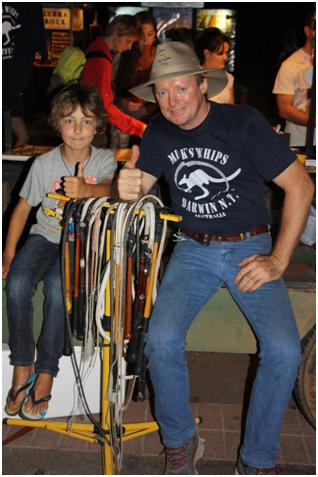
From Litchfield we travelled to Darwin via Mick’s Whips. Luke finally brought his own stock whip and even got personalised lessons from Mick. Mick is a well-known personality in Darwin as he sells whips at the markets and has been on many TV shows cracking his whips. We just happened to come across a sign for his whips in the middle of nowhere and followed it which brought us to his house which had a huge whip heralding the entrance to this property. Mick was one of the crack whippers that were in the opening of the 2000 Sydney Olympics. We also saw Mick again at the Mindil Markets in Darwin where he puts on a whip 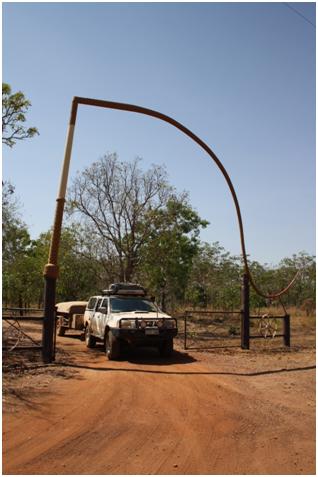 cracking show and sells them. Luke had to show him what he had learnt and, I gotta say, Luke learnt quickly!!
 We spent 6 days in Darwin and had a great time. We went to both the NT Museum and the Darwin Military Museum which had amazing exhibits on Cyclone Tracy in 1976 and the bombing of Darwin in 1942. Darwin had more bombs dropped on it than Pearl Harbour but since it was small it had a lot less deaths. Darwin is a very modern (and multicultural) city which is due to nearly being wiped out twice in nearly 35 years.
We also went to Doctors Gully where each day on high tide fish come into be feed by hand. The variety of fish was amazing and included mullet, batfish, archer fish, cat fish and a huge 2m groper!! We all really enjoyed feeding the fish but it was a bizarre feeling having fish swimming around your legs.
 The boys even saw stingrays and mudcrabs which weren’t allowed to be feed as they can be dangerous.
On our way out of Darwin, Jason decided to have our camper trailer leaf springs checked as he was worried about them. Both of them were busted!!! So $706 later and a night in a cabin later we finally left Darwin and headed for Kakadu National Park.








 Blueskyhi's Blog